
About This Project
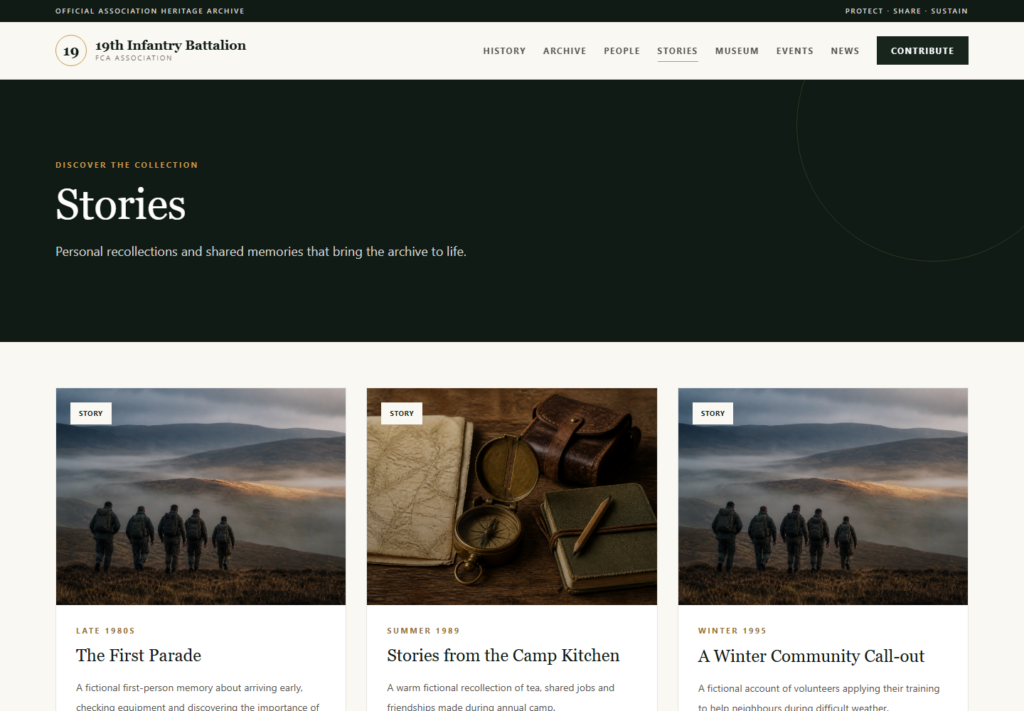
The 19th Infantry Battalion FCA Association works to preserve the history, traditions, and memories of the Battalion while maintaining links between former members, families, and the wider community. Through the STRIDE Programme, the Association identified a need to better preserve historical photographs, documents, records, and stories while improving membership administration and public access to its heritage. The organization recognized that preserving this history was difficult when relying on physical records and the individual knowledge of older members. Following the Design Thinking process, the agreed solution was a practical Digital Heritage and Membership Platform that could be managed by volunteers and expanded over time.
Design Thinking Workshops
8 participants attended the Design Thinking Workshop on 26th May 2026 at Boyle Military Post. The workshop explored heritage preservation, archive management, membership sustainability, public access, and opportunities for former members and families to contribute historical material.
The agreed challenge was: “How might we use digital tools to capture, preserve and share the history of the 19th Infantry Battalion FCA while reconnecting its members and supporting the future sustainability of the Association?” The final scope was developed around what could realistically be delivered within available time, resources, and organisational capacity.
Deliverables
STRIDE deliverables included:
• A modern public-facing website and secure administration portal.
• A searchable digital heritage archive featuring photograph and document management.
• Historical records categorised with dates and descriptions, including selected museum/artefact records.
• Selected personnel and nominal-roll information alongside a basic internal membership register.
• News and events management, plus public enquiry and membership information.
• A facility for former members and families to submit photographs, stories, and memories, with administrator approval workflows before publication.
• Public and restricted access controls with basic source/provenance information.
• Mobile-friendly design, backup and export capability, and full administrator training and system handover.
Note: The project focuses on creating the digital platform foundation rather than digitising the entire physical archive during the initial implementation.
Results & Impact
The project provides the Association with a central digital platform to preserve and share its heritage. Historical photographs, documents, stories, and other records can be added over time to a structured, searchable archive, reducing the organisation’s dependence on physical records and the isolated knowledge held by individual members.
Former members and families can also contribute historical material, with administrators reviewing submissions before publication. Membership and restricted information can be managed separately from public heritage content, supporting appropriate privacy and data protection.
By creating this sustainable digital foundation rather than attempting to digitise everything immediately, the Association can continue developing the archive over time. This helps protect an important part of local and military heritage while improving access for researchers, museum visitors, and future generations.